Thank you for stopping by.
It has been two years since the Roland VQD106 was released. As a heavy user of the VQD106, I’d like to share my experience after two years with the kit, whether I’m glad I bought it, and how it has changed my life as a drummer.
I’ve been using the VQD106 for two years, and I suspect there are still very few reviews based on that much hands-on use. If you’re thinking of buying one, I hope this helps you understand what it’s like to live with the kit over time.
[Current setup photo: VQD106 + V31]

The short answer: how it changed my life
What changed over these two years?
The VQD106 gave me a huge boost in motivation, and I started taking on all kinds of new challenges.
The biggest one was entering the Drum Magazine drumming contest for the first time. I also entered other competitions and started taking lessons from professional drummers.
The results: what I achieved
How did those challenges turn out?
I passed the first round of the Drum Magazine contest, but was eliminated in the second round.
[The first-round result, as posted on the Drum Magazine website]

My audition video has now been viewed more than 9,000 times:
Watch my contest entry
https://youtu.be/zZGMgiSZlek?si=LwR0wcrUgHM1SO0E
I also passed Level 6 of the Rock Drum Skills Test, a Japanese skills certification for rock drumming.
I became a “Category Master” in the drumming section of Yahoo! Chiebukuro, a Japanese question-and-answer site. This is a status awarded to active, knowledgeable contributors in a category.
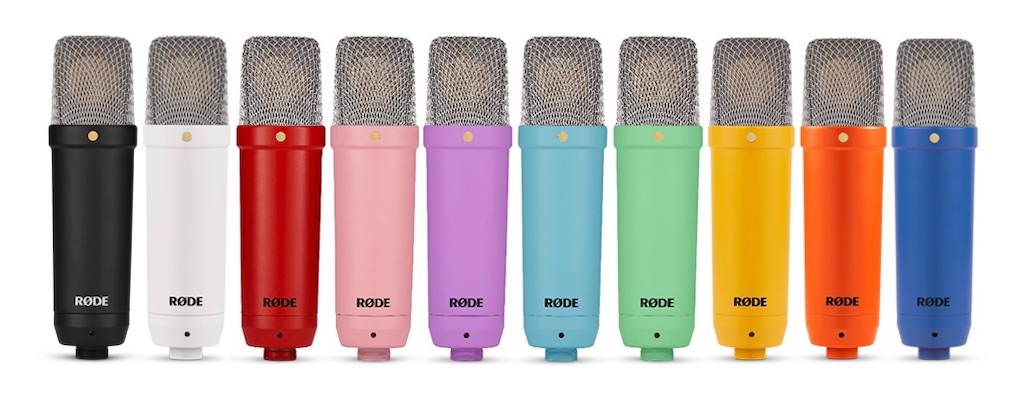
I was also selected as an official reviewer for the RØDE NT1 Signature Series microphone.
[Around July, I earned the Category Master status]

[I passed the Rock Drum Skills Test using the VQD106]

[My review of the NT1 Signature Series]
https://youtu.be/0QPU8mr3jko?si=eGybS0SoINRiS5q2
So, who is the VQD106 for?
I recommend it to people who love drums and want to play as much as possible.
For people like that, the VQD106 is an excellent option for practicing at home. I want to emphasize that again.
For someone like me, who loves playing drums, the VQD106 is worth much more than just being an electronic drum kit.
These days, it’s my best practice partner.
My life as a drummer
What has changed for me since I bought the VQD106? I’ll also go over the pros and cons I’ve discovered after two years of use.
How much has my practice time changed?
Before buying it, noise concerns meant I could hardly practice at home. Now I can practice whenever I want, including fundamentals and songs in the evening.
I’ve also been able to add lots of short practice sessions throughout the day, so my total practice time has increased substantially.
For students and working adults alike, free time often comes in the late afternoon or evening. One of the VQD106’s biggest advantages is being able to play at night, when many other electronic drum kits may still be too loud for home use.
How my setup evolved over two years
Right after the VQD106 came out, I bought the complete VQD106 kit with its sound module (rather than the VQD106 PADS version, which doesn’t include a module). I later removed one tom and set it up with one rack tom and one floor tom.
[My original setup]

Later, when individual pads became available for purchase, I added another cymbal to make a three-cymbal setup.
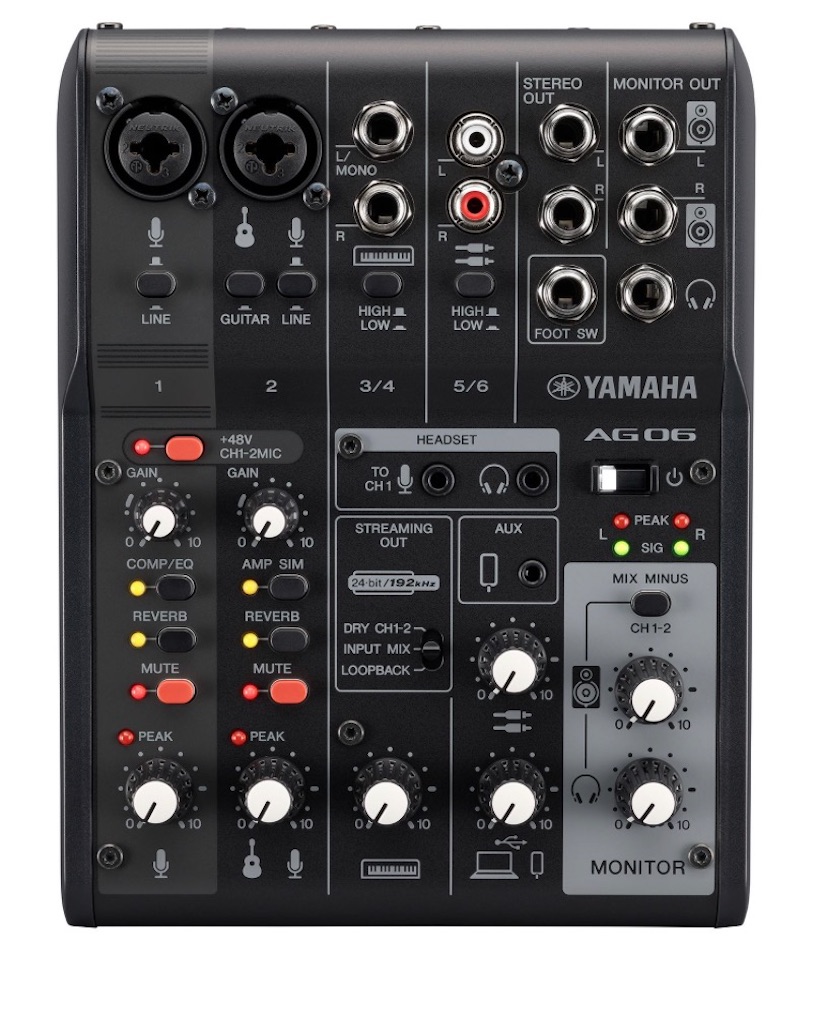
I also added a compact mixer. Once I had a convenient recording setup, I could record along with contest backing tracks and easily make audition videos.
[The YAMAHA AG06MK2 mixer]
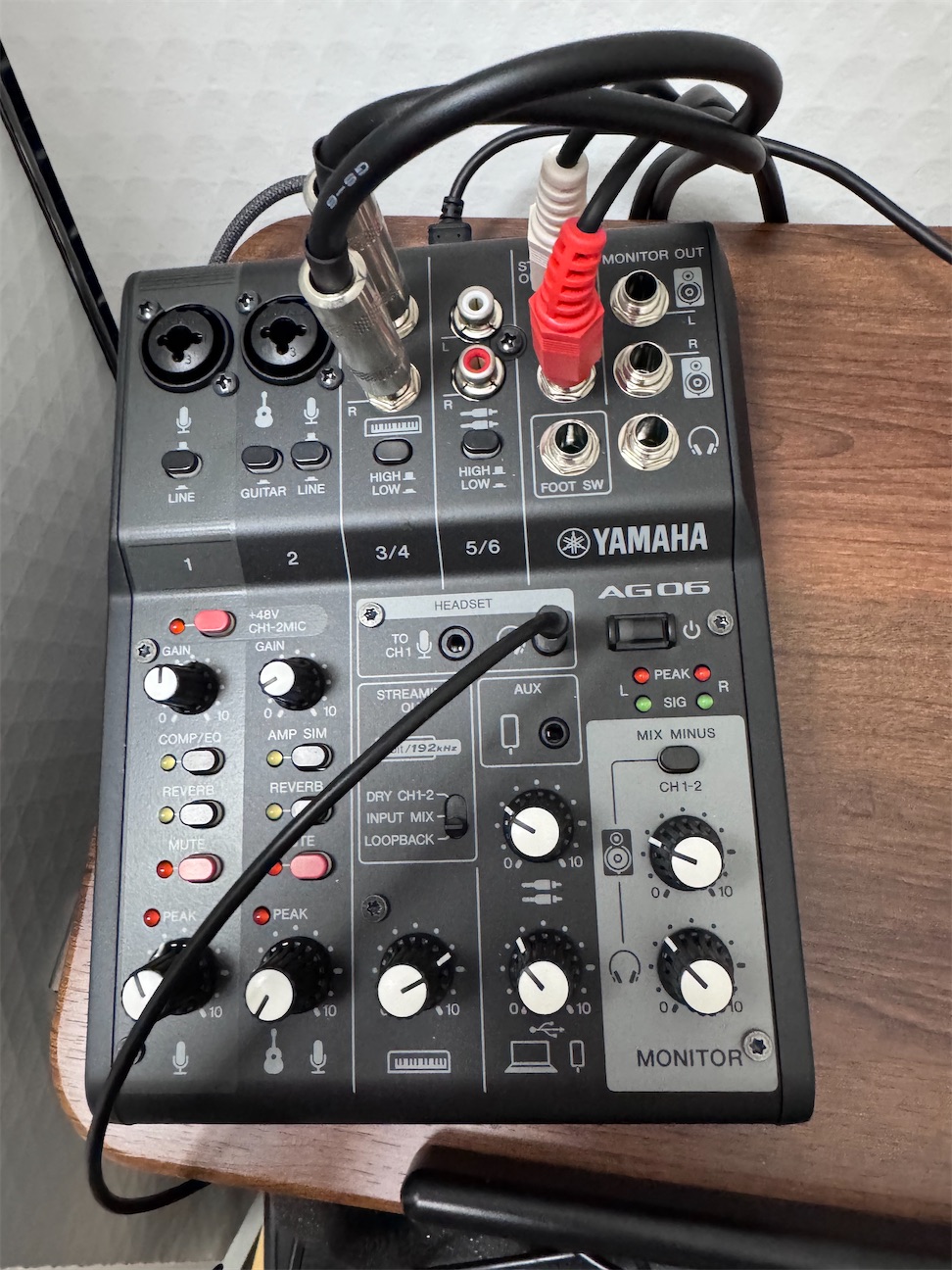
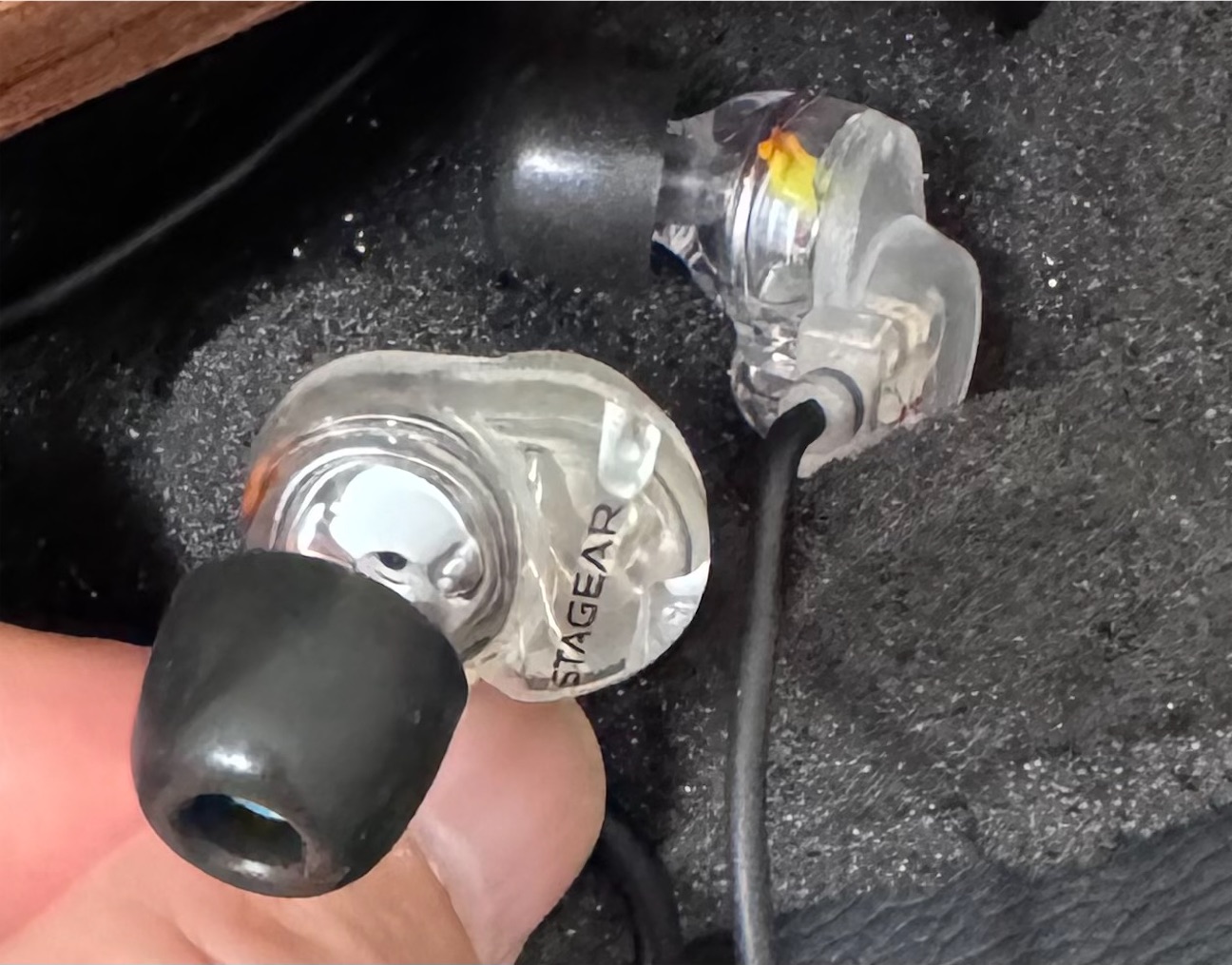
Adding in-ear monitors also made it possible for me to play along with backing tracks in live settings. Because I can hear the attacks more clearly, my practice has become more precise, especially when working on accuracy and timing.
[Close-up of my in-ear monitor setup]
Over time, I upgraded the sound module from the TD-02 to the TD-17 and then to the V31. The sound quality improved noticeably with each upgrade.
The biggest benefit is simply that playing is more fun. When the sound is better and playing feels more enjoyable, I want to spend more time behind the kit.
[The V31 module]

As a result, I’ve been able to practice a lot more.
Here are the pros and cons I’ve found after two years with the VQD106.
The advantages of the VQD106
1. I can play drums whenever I want
I love being able to sit down and play as soon as I feel like it. It’s the best. I’m so glad I bought it.
2. Is it really quiet? Yes—it really is!
To put it simply, it’s remarkably quiet. It’s so quiet that I’m almost lost for words—and I’m not usually short on words!
After practicing, I often ask my family, “Could you hear me playing earlier?” They usually say either, “I didn’t know you were playing,” or, “I noticed, but it didn’t bother me.”
That’s a night-and-day difference from my past experience of playing electronic drums in an apartment and receiving a letter from the landlord—in other words, a noise complaint from a neighbor.
The snare is especially quiet. I think this gets to the heart of the VQD106’s quiet design: I can practice basic exercises on the snare without my family even noticing, even when we’re in the same house.
3. It can be cost-effective over time
Playing an acoustic kit at a rehearsal studio in Japan often takes planning: you have to find an available booking, travel to the studio, and finish within your reserved time. You also have to pay the studio fee.
With an electronic kit at home, those scheduling and travel constraints disappear, and there’s no studio fee for each practice session.
If you practice a lot, the VQD106 can offer better time efficiency than relying on rehearsal studios. You can use small pockets of free time that would otherwise be lost.
4. Playing an acoustic kit becomes more fun, too
When you can practice regularly at home, your playing improves almost without you noticing.
Then, when you finally sit down at an acoustic kit after a while, you can feel the difference your practice has made. That sense of progress is incredibly satisfying—and fun.
It makes me want to practice at home even more.
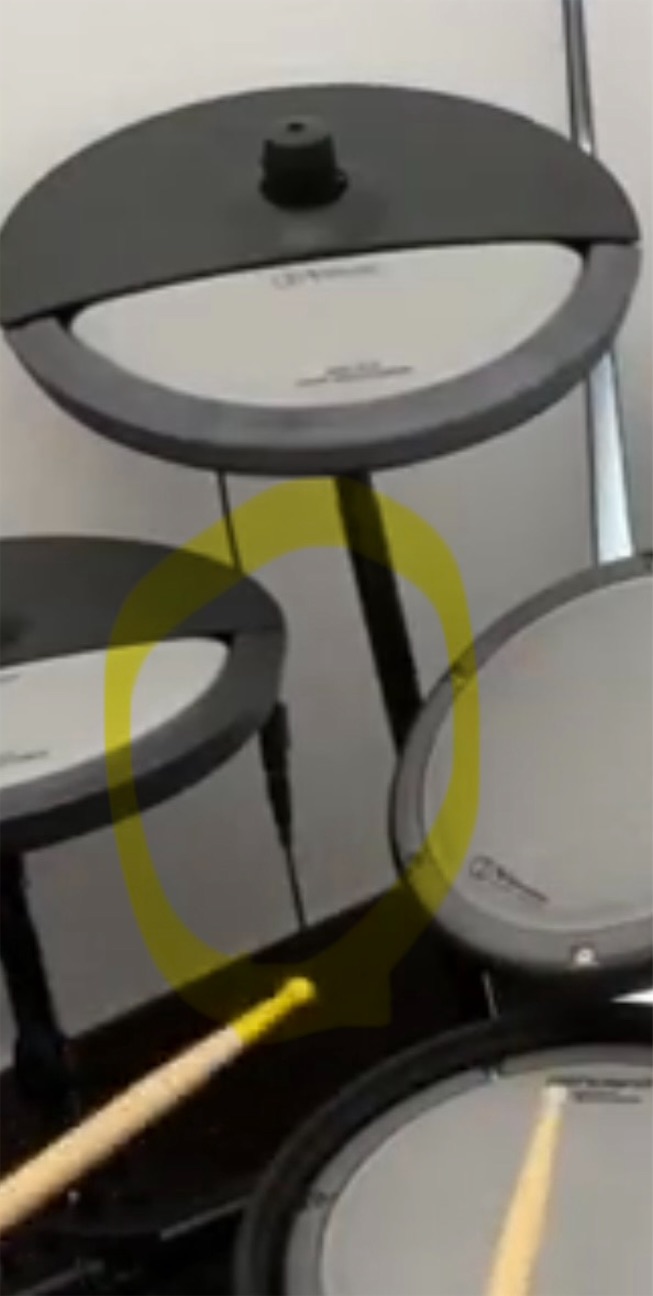
5. The cables can be neatly tucked away
One thoughtful feature of the VQD106 is that you can secure and hide the cables. It makes the whole setup look much cleaner.
[Left: a cymbal cable secured in place. Right: how it looks with the cable guide positioned at the back]
[Without securing the cable, it remains visible as shown by the yellow circle]
6. It takes away much of the stress around noise
I’ve struggled with noise issues for a long time. Now I can play without constantly worrying about whether I’m being too loud.
At least in the homes I’ve lived in—both an apartment and a detached house—I’ve been able to practice without waking someone who was sleeping in the next room.
That brings me a real sense of relief and peace of mind. I value that more than I expected.
I’m truly grateful to the people who developed this kit.
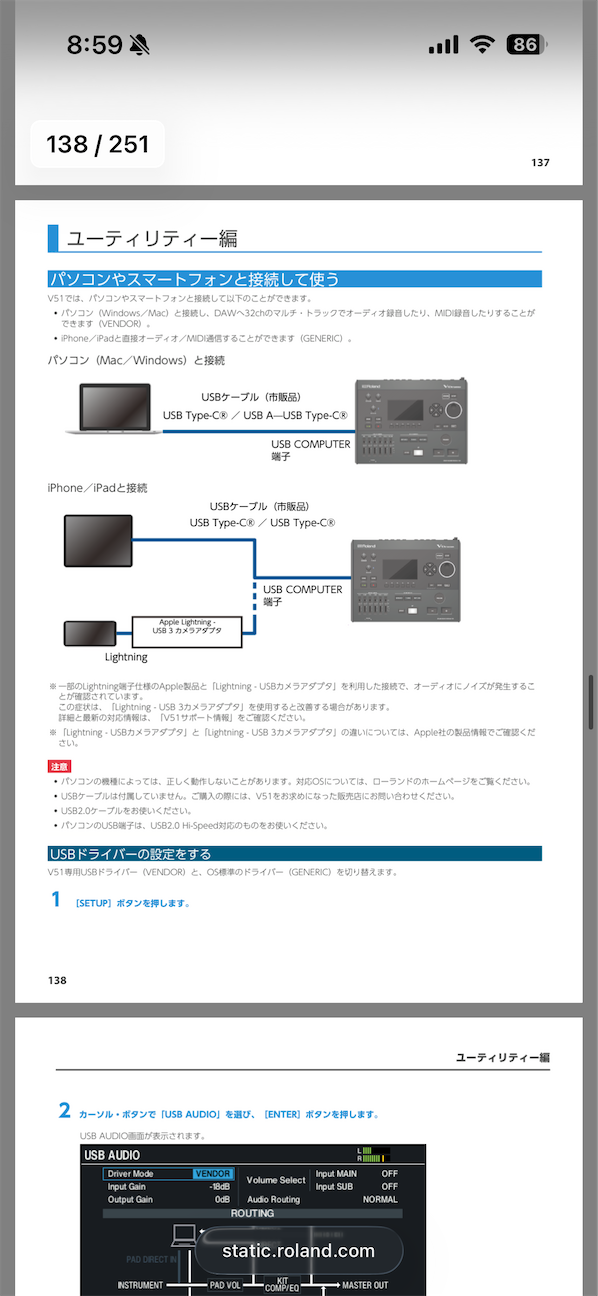
7. The V31 can connect directly to a smartphone
People ask about this fairly often on Yahoo! Chiebukuro, because it’s not widely known. With many older electronic drum modules, connecting to a smartphone typically required an audio interface.
With Roland’s newer V-Series modules, you can set the USB mode to Generic and connect the module directly to a smartphone—such as an iPhone—using a USB-C cable to send audio. It’s simple!
[Direct USB-C connection to a smartphone]
This is a small tip, but a useful one.
8. The kit has held up well after two years
I play the VQD106 almost every day, and it still works just as well as when it was new. Nothing has broken, and the mesh heads haven’t sagged or worn out.
[Left: the snare pad’s mesh surface. Right: a close-up]
The sensors still respond properly, with no noticeable deterioration. I’m a fairly hard hitter—so hard that a Roland developer was surprised when they saw me play in person. I’m impressed that the kit has held up so well despite that.
[Close-up of a cymbal pad]

In my experience, there’s been no noticeable wear after almost-daily playing for two years.
For comparison, I used a Roland TD-10W for about ten years, and its mesh heads never tore. That experience has made me confident in Roland’s durability.
※別記事はこちら
ローランドのVQD106開発チームに会いに行ってきた!
【The downsides of the VQD106 + V31 setup】
1. The initial cost is significant
The upfront cost is substantial. However, as I mentioned above, the kit can offer a worthwhile return compared with repeated rehearsal-studio visits. I think it’s best to consider the overall value, including the time and convenience it gives you.
2. The kick drum takes up depth
I use an OTODASU compact soundproof booth, so space is limited. I sometimes wish the kick drum took up a little less room front to back. In a regular room, though, it shouldn’t be a problem.
3. There’s no cymbal bell zone
At first, this didn’t bother me much. After playing for two years, though, I’ve started to miss it. I’ve come up with a new technique that recreates some of that feel, so I’ve been able to make up for it to a degree.
4. I haven’t found an official extension cable for the module connection
I haven’t searched extensively, but I don’t think Roland offers an official extension cable for the module’s multi-pin connection. If you need more length, extending the cables on the individual pad side may be the practical option.
【Things I thought might be downsides—but weren’t】
1. The hi-hat is a separate pad and pedal setup
Beginners might be concerned about this, but I already know how an acoustic hi-hat feels, so it hasn’t been a disadvantage for me. I haven’t found it awkward.
2. The hi-hat pedal spring feels stiff, but you can adjust it
The VQD106’s hi-hat pedal actually has two springs. Removing one gives it a feel that works well for me. A lot of people seem to struggle with the pedal without realizing it can be adjusted, but this may solve the problem for them.
3. The kick drum head can get black marks
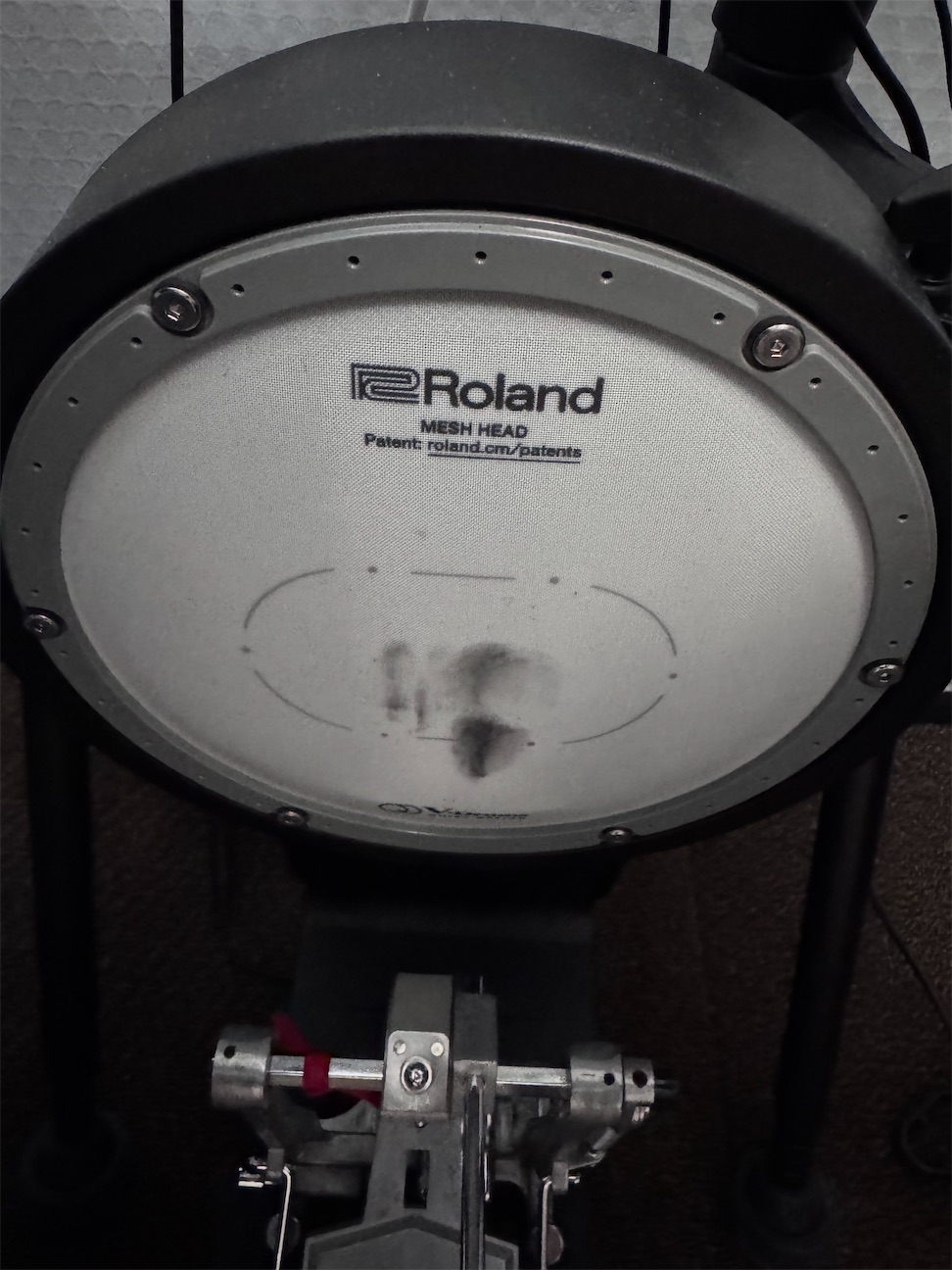
The black ball beater can wear down and leave some marks on the kick pad. If that bothers you, you could attach a protective patch. The marks are minor, so they don’t bother me.
[Left: the kick pad. Right: a close-up]
4. The tips of my sticks wear down
This can happen with mesh heads on electronic drums generally. Because the VQD106 lets me practice for longer, I’ve noticed it more. I replace my sticks about once a year.
[Left: a stick used for more than six months. Right: a new stick of the same model]

5. The V31 takes a while to start up
It takes a few dozen seconds after switching it on. I use that time to warm up lightly on the snare, so it’s not a major issue.
6. The pads feel soft
The noise-reducing pads may feel soft compared with regular electronic drum pads. I got used to them, and now it doesn’t bother me. In some ways, that cushioning might even help protect my wrists from impact—at least, that’s how it feels to me!
【Final thoughts】
It’s been two years since I bought the VQD106.
Looking back, the best thing about buying it isn’t just that I can play drums quietly at home. Practicing has become more enjoyable, I practice more, and I’ve had more chances to take on new challenges.
Most of all, after more than 25 years as a drummer, I’m enjoying making music even more than before.
That, to me, is the greatest value the VQD106 has brought to my life.
I’m looking forward to growing as a drummer with this kit by my side.
Thank you for reading to the end!
That’s all for now!
#VQD106 #Roland #VDrums